

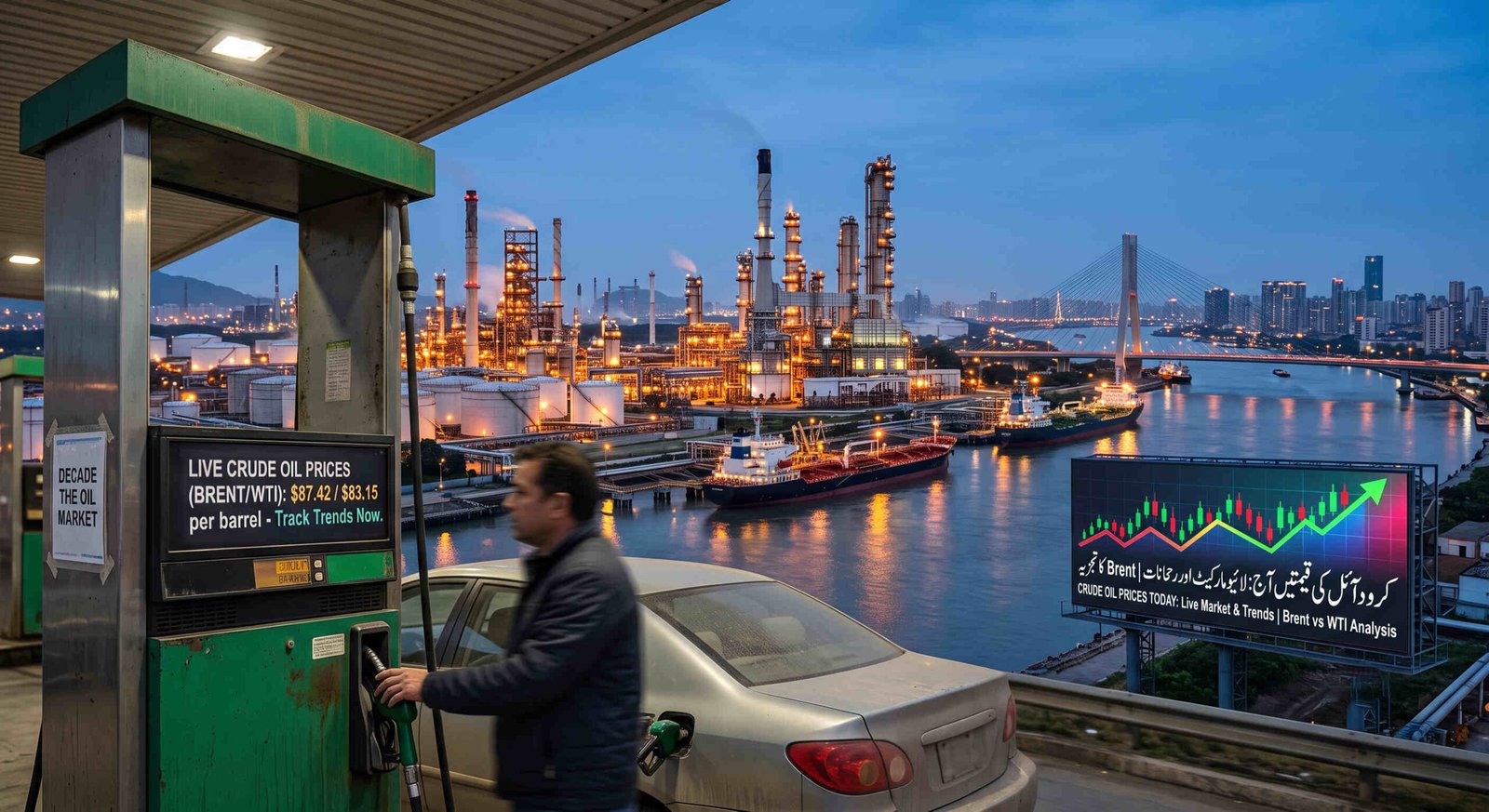
Tracking crude oil prices helps explain why gas costs change so fast.
It happens to all of us at the pump.
One day filling your tank feels reasonable.
However the next day your wallet takes a big hit.
The main trigger behind these shifts is crude oil prices.
Crude oil powers cars and heats our homes.
It keeps big ships moving worldwide.
Consequently when energy costs shift other prices follow.
Understanding energy markets can feel tricky at first.
Traders often use confusing words that turn people away.
However learning the basics is actually quite simple.
In this guide we break down how energy pricing works.
Specifically we will cover charts and daily global factors.
Ultimately you will feel confident tracking this key market.
What Drives Crude Oil Prices Today

crude oil prices
Energy markets react fast to global changes every day.
For instance if you check crude oil prices today you see constant movement.
Prices move up and down based on simple supply and demand.
When supply tightens the price usually goes higher.
Conversely when supply grows energy prices often fall fast.
┌─────────────────────────────────────────────────────────────┐
│ SUPPLY vs. DEMAND │
├──────────────────────────────┬──────────────────────────────┤
│ Higher Demand Tight Supply │ Price Increases (Rallies) │
├──────────────────────────────┼──────────────────────────────┤
│ Lower Demand High Supply │ Price Decreases (Drops) │
└──────────────────────────────┴──────────────────────────────┘
Current crude oil prices reflect daily news weather and trade policy.
Furthermore trade route tension creates sudden price spikes.
On the other hand peaceful pathways help bring market stability.
Even normal seasons affect what we pay at the pump.
For example summer travel pushes fuel demand higher.
Meanwhile winter brings high demand for home heating fuel.
Therefore tracking todays crude oil prices helps us spot these cycles early.
Key Takeaway Energy markets react fast to global news policy shifts and weather patterns.
Brent vs. WTI What Do These Benchmarks Mean
When following market news you see two main terms constantly.
These key terms are Brent crude and West Texas Intermediate (WTI).
Together they serve as top benchmarks for global oil prices.
Brent Crude Oil
Brent crude oil prices track oil sourced from the North Sea.
This type serves as the global benchmark for international trading.
Because of this international fuel costs usually link to Brent rates.
WTI Crude Oil
Meanwhile wti crude oil prices represent oil extracted across the United States.
It is light and sweet making it easy to refine into gas.
Thus when checking us crude oil prices WTI is the main benchmark to watch.
| Benchmark | Primary Region | Primary Usage |
| Brent Crude | North Sea Global | Global trade benchmark |
| WTI Crude | United States | US domestic benchmark |
Both benchmarks generally move in the same direction over time.
However local supply issues can cause a price gap between them.
How to Read a Crude Oil Prices Chart
Checking a crude oil prices chart can look hard at first glance.
Line charts show simple price trends over weeks or years.
In addition candlestick charts give details like daily highs and lows.
[ High Price ]
│
┌───────────┐
│ │ ◄── Real Body (Price Spread)
└───────────┘
│
[ Low Price ]
When watching crude oil prices live look for clear technical trends.
A series of higher highs signals a steady upward trend.
In contrast lower lows mean the market is cooling down.
Looking at past chart history helps traders spot floor and ceiling levels.
Support acts like a floor where buying usually picks up.
Meanwhile resistance acts like a ceiling where selling increases.
As a result charts help you spot trends before they hit consumer news.
Why Is Crude Oil Measured Per Barrel
You often hear news reports quote crude oil prices per barrel.
A standard industrial barrel holds exactly 42 US gallons.
That converts to about 159 liters in total volume.
1 Standard Barrel
│
├── 42 US Gallons
└── ~159 Liters
This market standard started back in the nineteenth century.
Back then early oil producers used wooden whiskey barrels for trade.
Eventually that specific size stuck and remains in use today.
When watching crude oil prices today per barrel refine yields vary.
Specifically one barrel yields roughly 19 gallons of usable gasoline.
The rest turns into diesel jet fuel and plastic products.
Recent Shifts Understanding Spring and Summer 2026 Trends
Markets saw big price swings throughout early and mid 2026 trading.
Looking back at current crude oil prices march 2026 shows heavy volatility.
Trade route friction created sharp price hikes during early spring.
By late spring global supply balances began to settle down.
Analyzing current crude oil prices april 2026 illustrates these market fixes.
Producers adjusted output which helped cool extreme price spikes.
By July 2026 Middle East tension sparked fresh rallies near $100 before pulling back.
Reviewing past monthly trends gives clear insight into future price moves.
2026 Price Trend
│
├── March 2026 Supply friction drives early price spikes
├── April 2026 Output shifts bring market cooling
└── July 2026 Regional tension sparks fresh market rallies
Global Exchange Rates and Currency Impact
Crude oil trades globally in United States dollars.
When the US dollar grows strong oil gets pricey for foreign buyers.
Conversely a weak dollar makes buying oil easier for foreign markets.
Local exchange rates heavily shape final retail fuel prices.
For instance looking at crude oil prices in yen highlights currency effects.
If Japanese currency weakens import costs rise automatically.
Therefore even if global oil prices stay flat local prices can rise.
Watching currency moves helps explain gas costs in different countries worldwide.
Will Crude Oil Prices Rise Tomorrow
Everyone wants to know if fuel costs will climb soon.
Asking will crude oil prices rise tomorrow is a very common thought.
However predicting shortterm daily moves accurately is nearly impossible.
SHORTTERM INPUTS LONGTERM DRIVERS
┌─────────────────────────┐ ┌─────────────────────────┐
│ • Daily Futures Orders │ │ • OPEC Production Policy│
│ • Weather Anomalies │ VS │ • Industrial Output │
│ • Inventory Updates │ │ • Renewable Transition │
└─────────────────────────┘ └─────────────────────────┘
Instead traders check crude oil prices futures to test market mood.
Futures contracts reflect agreed prices for deliveries months away.
Furthermore analysts watch official OPEC targets and overall economic growth.
If global factories boost production energy use climbs fast.
Conversely if economic growth slows down energy demand softens.
Keeping an eye on crude oil prices now offers a clear starting baseline.
Combining current numbers with news updates helps you predict coming trends.
Practical Ways to Stay Informed
You do not need to be a Wall Street trader to track energy.
Following a few consistent habits keeps you wellinformed over time
- Check Live Tickers
Bookmark financial news sites to track crude oil prices live easily.
- Follow Supply Reports
Pay attention to weekly inventory updates from top energy groups.
- Watch Transportation Patterns
Shifts in shipping routes offer early hints about future cost changes.
- Compare Benchmarks
Monitor how wti crude oil prices today compare to crude oil prices brent rates.
Ultimately staying aware of these factors helps you plan expenses much better.
When you understand the market price shifts at the pump stop feeling random.