

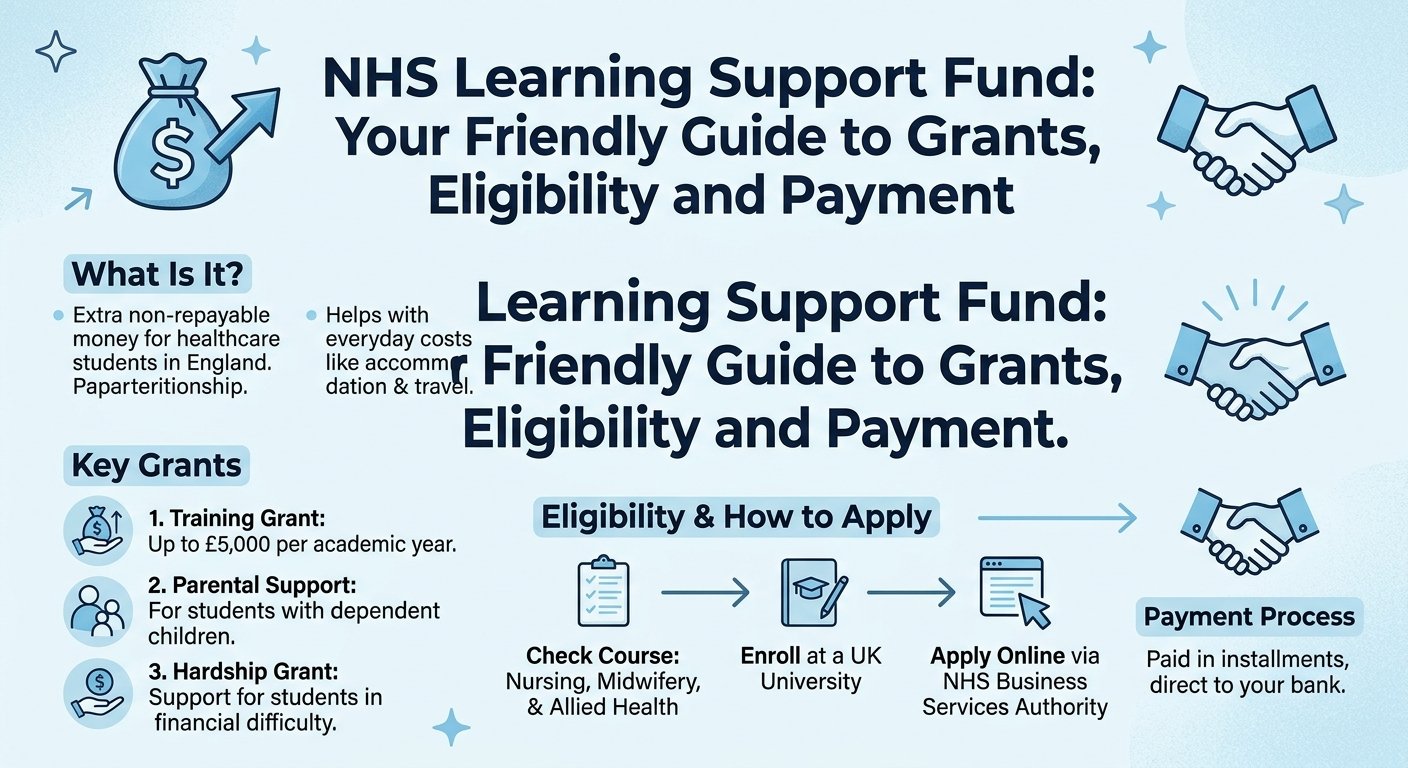
Studying to become a nurse, midwife or allied health professional is exciting. It can also be expensive. In fact, rent, books, travel to placements and childcare all add up quickly. The good news is that help exists. The NHS Learning Support Fund, often called the LSF, gives extra money to eligible students. In this guide, we will walk through it together in plain, simple language.
What Is the NHS Learning Support Fund?
The NHS Learning Support Fund is a government scheme in England. It gives financial help to students on certain healthcare courses. Also, the money is separate from your tuition fee loan and maintenance loan. You do not usually pay it back, which makes it very valuable.
Think of it as a helping hand on top of your normal student finance. It can support everyday costs, placement travel and childcare. Some students also get extra support during hard times. Each grant has its own rules, so we will go through them one by one.

Why We Cover This Topic on Yonopress
Many readers ask us about money in education and health careers. That is why yonopress shares guides like this one. Our goal at yonopress is simple. We want to explain tricky topics in a friendly way, so you feel confident and informed.
We are a digital publishing platform, not a government body. So we always point you to official sources for final answers. Use this article to understand the big picture. Then check the official NHS Business Services Authority (NHSBSA) website before you apply. Amounts and rules can change from year to year.
Who Can Get the Learning Support Fund?
Eligibility is the first thing most people want to know. The fund is mainly for students living and studying in England. You must be on an approved pre-registration healthcare course. Your course also needs to be at a university or provider that takes part in the scheme.
You also need to be eligible for student finance in England. That usually depends on your residency and immigration status. In addition, some students on certain postgraduate courses can apply. Rules differ by course and start date, so always read the current guidance. If you are unsure, contact your university finance team. They deal with these questions all the time.
Which Courses Are Covered?
Many popular healthcare courses are included in the scheme. Nursing, midwifery and many allied health courses usually qualify. These include physiotherapy, occupational therapy, radiography, dietetics and podiatry. Paramedic science and speech and language therapy are often on the list too.
Some courses are not covered, so do not assume. Dentistry, medicine and some other degrees follow a different funding route. Wales, Scotland and Northern Ireland also run their own schemes. If you study outside England, look at the funding body for your home nation. A quick check now can save you stress later.
Types of Grants You Can Claim
The LSF is not one single payment. It is a set of different grants for different needs. You may qualify for one or several of them. Let us look at each grant in a simple way.
The Training Grant
The training grant is the main support for many students. For most eligible courses, it has been £5,000 per academic year. Some courses where the NHS needs more staff have attracted extra money on top. The exact amounts can change, so check the current figures.
Basically, this grant helps with general study costs. You can use it for rent, food, books or bills. In other words, it is not tied to one specific expense. That freedom makes it very useful for students with busy lives.
Parental Learning Allowance
If you are a student parent, this one is for you. The Parental Learning Allowance helps with the extra costs of raising children while you study. You may qualify if you have dependent children. The rules about your household and income can apply.
The amount is a set yearly figure, and it has been around £1,200 in recent years. Always confirm today’s amount on the official website. This allowance can make a real difference to family budgets. Many parents say it eases the pressure of juggling study and home life.
Childcare Learning Allowance
Childcare can eat up a huge part of your money. The Childcare Learning Allowance helps cover some of those costs. It usually pays a share of your approved childcare bills, up to a yearly limit. The childcare provider normally needs to be registered.
You will need proof of your costs, such as invoices or receipts. So keep these safe from the very start. Missing paperwork is one of the most common reasons for delays. A simple folder on your phone can save you a lot of worry.
Travel and Dual Accommodation Expenses
Placements are a big part of healthcare training. Sometimes they are far from your home or university. The LSF can help with extra travel costs for these placements. It usually covers the amount above what you would normally spend travelling to university.
If a placement is so far that you need a second place to stay, you may claim dual accommodation costs. This applies when you pay for two homes at once. Also, you must keep your receipts and tickets. Claims usually have time limits, so submit them promptly.
Exceptional Support Fund
Life sometimes throws a curveball. The Exceptional Support Fund is there for students facing real financial hardship. It is not automatic, and you must show that you need extra help. The fund has had a yearly maximum, so check the current limit.
You usually need to apply for other grants first. Then you explain your situation and provide evidence. Above all, be honest and clear in your application. If you are struggling, please do not stay silent. Asking for help is a sign of strength, not weakness.
How to Apply Step by Step
Applying is easier than it looks. You do it online through the NHSBSA Learning Support Fund service. You will create an account and fill in your details. Your university also confirms that you are on an eligible course.
Start by getting your documents ready. You may need your student reference number and course details. You might also need proof of identity and your bank details. If you claim childcare or parental help, add the extra evidence. Submit everything in one go if you can. That keeps things smooth and avoids back-and-forth emails.
Additionally, you usually need to apply for each academic year. Do not assume last year’s application carries over. Check the deadline for your year and set a reminder. That is why applying early gives you more breathing space if something goes wrong.
How and When You Get Paid
Payment is the part everyone cares about most. The training grant is normally paid in instalments through the academic year. Your university confirms that you are attending and engaged. After that, the NHSBSA releases the money to your bank account.
Other grants follow their own timing. Claims for travel are usually paid after you submit them with proof. Childcare payments depend on your invoices and when they are approved. Delays can happen, especially at busy times. So please do not rely on one payment landing on one exact day.
Make sure your bank details are correct. A single wrong digit can hold up your money for weeks. Check your account details twice before you press submit. It takes a minute and can save you a headache.
READ ALSO:NHS Learning fund your friendly
Common Mistakes to Avoid
A few small mistakes cause most of the problems. Missing the deadline is a big one. Another is forgetting to attach evidence for a claim. Some students also forget to update their details after moving house or changing banks.
Moreover, another common slip is mixing up the LSF with student finance. They are two separate systems. Your tuition fee loan and maintenance loan come from Student Finance England. Your LSF grants come from the NHSBSA. You usually need to apply to both. Keep track of each application so nothing falls through the cracks.
Smart Habits That Make Life Easier
A little organisation goes a long way. Create one folder for all your LSF papers. Save emails, receipts, tickets and invoices as soon as you get them. Take clear photos so nothing is blurry or cut off.
Next, write down your key dates in your phone calendar. Add reminders a week before each deadline. If you use a digital hub or notes app for study life, add your finance tasks there. Staying on top of small tasks keeps big problems away. It also helps you feel calm and in control.
Does the Fund Affect Other Money?
Many students worry about this question. In most cases, the LSF is treated differently from a loan. You generally do not repay it. It also should not reduce your student loan in the usual way. However, rules about benefits can be more complex.
If you receive other benefits, speak to an adviser. Your university money advice team can help. They know how different payments work together. In short, a quick chat can stop you from making a costly mistake.
Frequently Asked Questions
Do I have to pay the Learning Support Fund back?
In general, no. The LSF grants are not loans, so you do not repay them in the normal way. Still, you should follow the rules carefully. If you leave your course early or give wrong information, you could be asked to return money. Always keep your university and the NHSBSA updated about any changes.
Can I apply if I am a part-time student?
Some part-time students may be able to apply, but the rules can differ. The amount you receive might also be adjusted to match your study time. Check the current guidance for your exact course and study pattern. Your university’s finance team can also confirm what applies in your case.
How long does an application take to process?
Processing times vary depending on the time of year and the type of claim. Busy periods at the start of term can slow things down. Applying early and sending complete evidence helps a lot. If you are worried about a delay, contact the NHSBSA directly and ask for an update.
Where can I find the most accurate information?
The official NHSBSA Learning Support Fund pages are the best place to look. They show current amounts, deadlines and eligibility rules. Your university finance team is another great source. Articles like this one, including those on yonopress, are best used as a friendly starting point.
Final Thoughts
The NHS Learning Support Fund can lighten the load for many healthcare students. It will not solve every money worry. But it can make your studies far more manageable. To sum up, check your eligibility early, gather your documents and apply on time.
We hope this friendly guide made things clearer. If you found it useful, share it with a classmate who might need it. At yonopress, we want to keep making health and education topics simple and human. Good luck with your studies, and remember that you are not alone on this journey.