

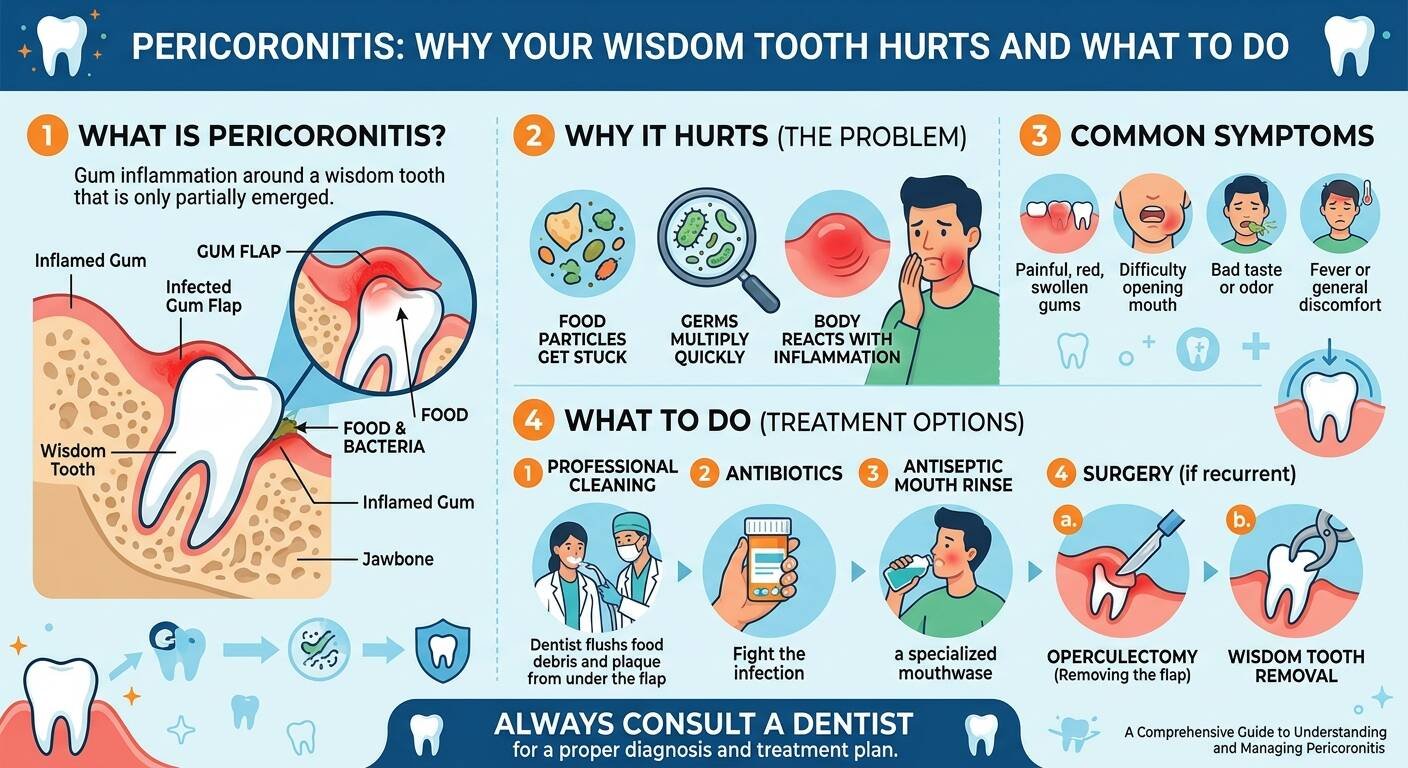
So your jaw feels sore near the back. Naturally youre probably wondering whats going on. Chances are youre dealing with pericoronitis. Dont worry though. Overall its common. And its very treatable. So lets walk through what you need to know. Well keep it plain and friendly.
What Is Pericoronitis Exactly
Basically pericoronitis is gum swelling around a wisdom tooth. Most often it happens when a tooth is stuck. Specifically when a tooth only half grows in a small gum flap stays behind. Sadly food and bacteria love hiding under that flap. As a result this causes pain and soreness over time.
For example think of it like a tiny trap. It catches everything you eat. Quickly germs build up fast in there. Then your body reacts with swelling. Thats the pain you feel right now. Still knowing this helps you deal with it.
What Causes Pericoronitis
Generally wisdom teeth are the main cause of pericoronitis. Often they dont have enough room to grow. So they come in sideways or only halfway. As a result that leftover gum flap traps food and germs.
Also poor tooth care makes things worse fast. Similarly stress and a weak immune system play a part. Even chewing habits can irritate that gum flap. Basically anything that traps germs near the tooth raises your risk.
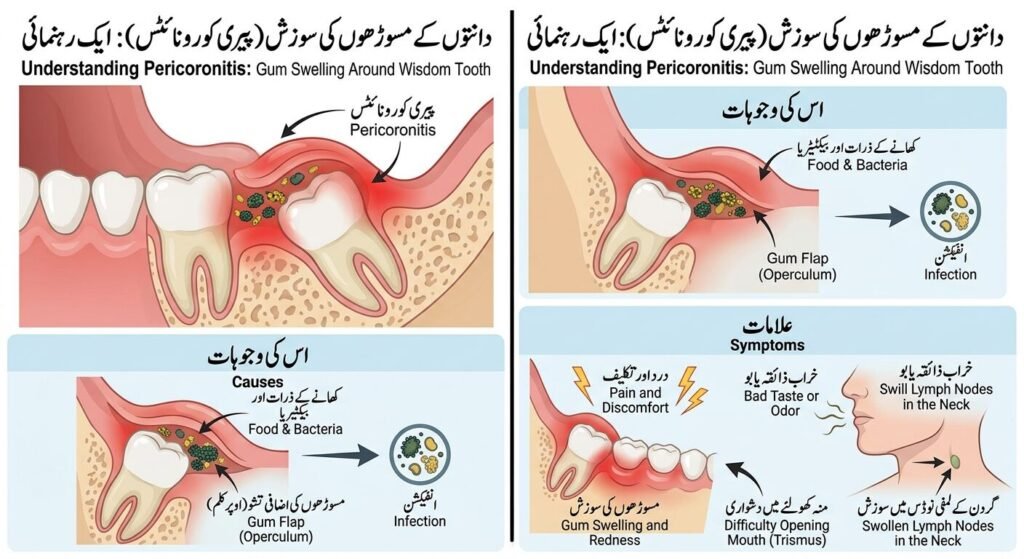
Common Pericoronitis Symptoms To Watch For
Usually symptoms creep in slowly then hit hard. First you might notice swelling near the back tooth. Then pain often follows especially when you chew. Sometimes people notice a bad taste in their mouth.
Also bad breath is another clear sign. Similarly your jaw might feel stiff or hard to open. In worse cases you could get a fever. Also the glands in your neck may swell up. So if you notice pus or a bad smell dont ignore it.
Can Pericoronitis Kill You
Honestly this question comes up a lot. And its fair to ask. On its own pericoronitis rarely turns deadly. However if left alone too long the germs can spread. Over time they may travel to your jaw or neck.
In rare cases though an ignored infection turns serious. Thats why dentists always say to treat it early. So dont panic but dont ignore the warning signs. Overall treating it early keeps things simple and safe.
How Long Does Pericoronitis Last
Usually mild cases clear up in a few days. Thats with proper cleaning and home care. However medium cases might last one or two weeks. Meanwhile bad cases of pericoronitis need a dentists help to heal.
So if symptoms last more than a week see a dentist. Otherwise waiting too long can make a small issue worse. Generally early action means a faster easier recovery.
Pericoronitis Treatment Options Explained
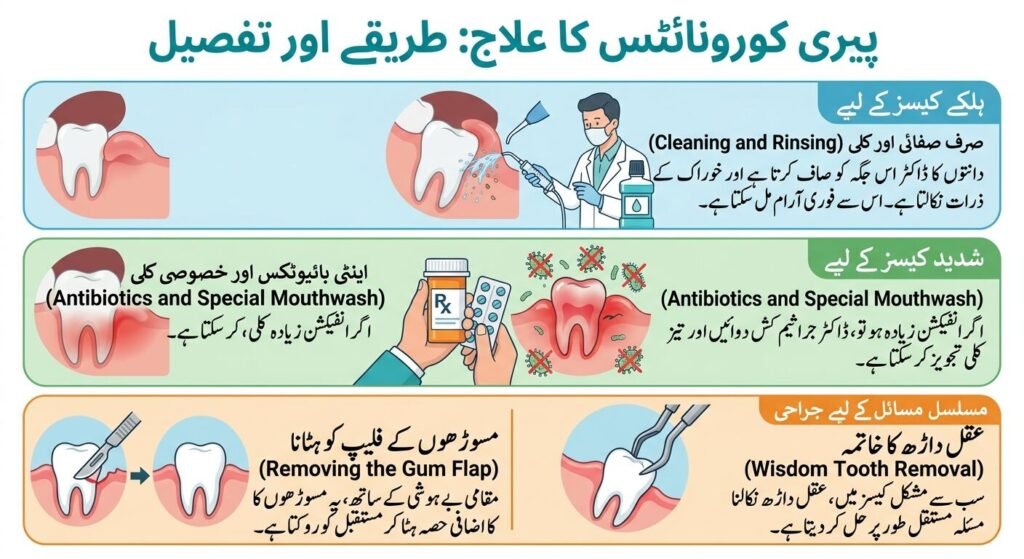
Generally treatment depends on how bad your case is. For mild cases dentists often clean the area first. Then they flush out food trapped under the gum flap. This alone can bring quick relief.
For worse cases antibiotics might be needed too. Specifically pericoronitis antibiotics help fight the germs from inside. Also your dentist may give you a stronger mouth rinse. In cases that keep coming back minor surgery is an option.
Sometimes the loose gum flap gets removed fully. This step called an operculectomy uses local numbing. Its quick and it stops future flare ups. In tougher cases wisdom tooth removal solves the problem for good.
Pericoronitis Removal When Is It Needed
Basically pericoronitis removal means taking out the gum flap or tooth. If cleaning and antibiotics dont help enough removal is needed. So dentists look at your symptoms tooth spot and how often it returns.
Often an infection that keeps coming back means removal will help. After all nobody wants the same pain again and again. So a quick chat with your dentist finds the best next step.
How To Treat Pericoronitis At Home
Generally home care works well for mild symptoms. Start with warm salt water rinses a few times a day. This cuts down swelling and clears out trapped food. Also a pericoronitis mouthwash that kills germs helps even more.
Meanwhile gently brushing the area stops germs from building up. Also avoid hard or chewy foods until the swelling goes down. Also pain pills from the store can ease the ache for a while. Finally drinking enough water helps your body heal.
That said home care isnt always a full fix. It eases symptoms while you wait for a dentist. So if pain gets worse or you get a fever see your dentist right away.
How To Get Rid Of Pericoronitis For Good
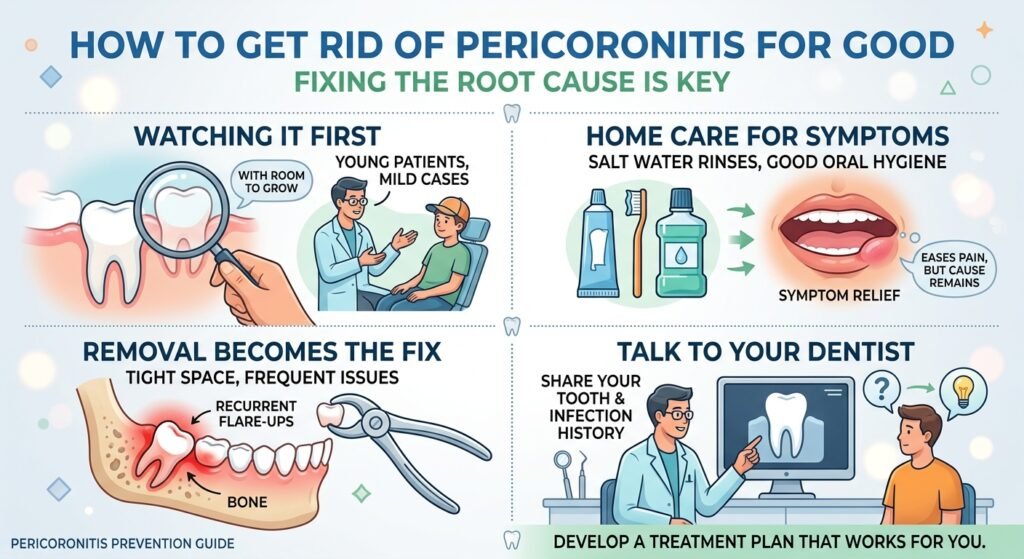
Basically getting rid of pericoronitis means fixing the root cause. Home care eases symptoms but the flap or tooth causes it to return. So many dentists say to just watch it first especially in young patients.
If your wisdom tooth has room to grow watching it works fine. But if space is tight removal often becomes the fix. So talk to your dentist about your tooth and its history.
Pericoronitis With No Wisdom Teeth Is That Possible
Yes pericoronitis without wisdom teeth can happen too. Basically any tooth thats half grown in carries the same risk. This includes teeth that come in during childhood. Also an injury or gum issue can cause the same symptoms.
So if your wisdom teeth are already gone dont rule this out. Instead ask your dentist to check whats going on. After all a real checkup beats a guess for your health.
Pericoronitis After Wisdom Teeth Removal
It might sound odd but this can happen at times. Sometimes a small bit of gum stays sore after surgery. Also an infection near the healing spot can look the same.
So if you notice swelling or pain after removal call your dentist. Theyll check if its normal healing or something else. Overall a quick follow-up visit makes a big difference.
Does Pericoronitis Go Away On Its Own
Yes mild cases can sometimes get better without formal care. Good tooth care and rinsing can ease small soreness. However relying on this alone is risky for most people.
Without treating the trapped germs symptoms often come back fast. So it turns into a cycle of flare ups. Getting real treatment breaks that cycle and saves you from more pain.
Pericoronitis Abscess A Sign Of Serious Infection
Basically an abscess forms when germs build up into a painful lump. This is worse than plain pericoronitis symptoms. You might feel a deep throbbing pain with visible swelling.
So a pericoronitis abscess needs quick dental care. If left alone it can spread past the tooth area. So dont wait on this one book a visit fast.
Severe Pericoronitis Infection Warning Signs
Generally a severe infection looks different from a mild flare up. For instance trouble swallowing or opening your mouth is a big clue. Also fever face swelling and spreading pain are red flags.
Together these signs mean the infection has spread further. So this counts as a dental emergency that needs fast care. Head to a dentist or the ER without delay.
Final Thoughts On Managing Pericoronitis
Overall pericoronitis is annoying but you can manage it well. Knowing your symptoms helps you act at the right time. Basically home care works for mild cases and a dentist helps with bad ones.
So dont ignore signs like fever or spreading swelling. Instead your dentist can point you to the right fix. Generally acting early leads to faster easier relief.
If youre dealing with pericoronitis right now try not to stress. After all millions of people go through this each year. With the right care youll feel normal again soon.