

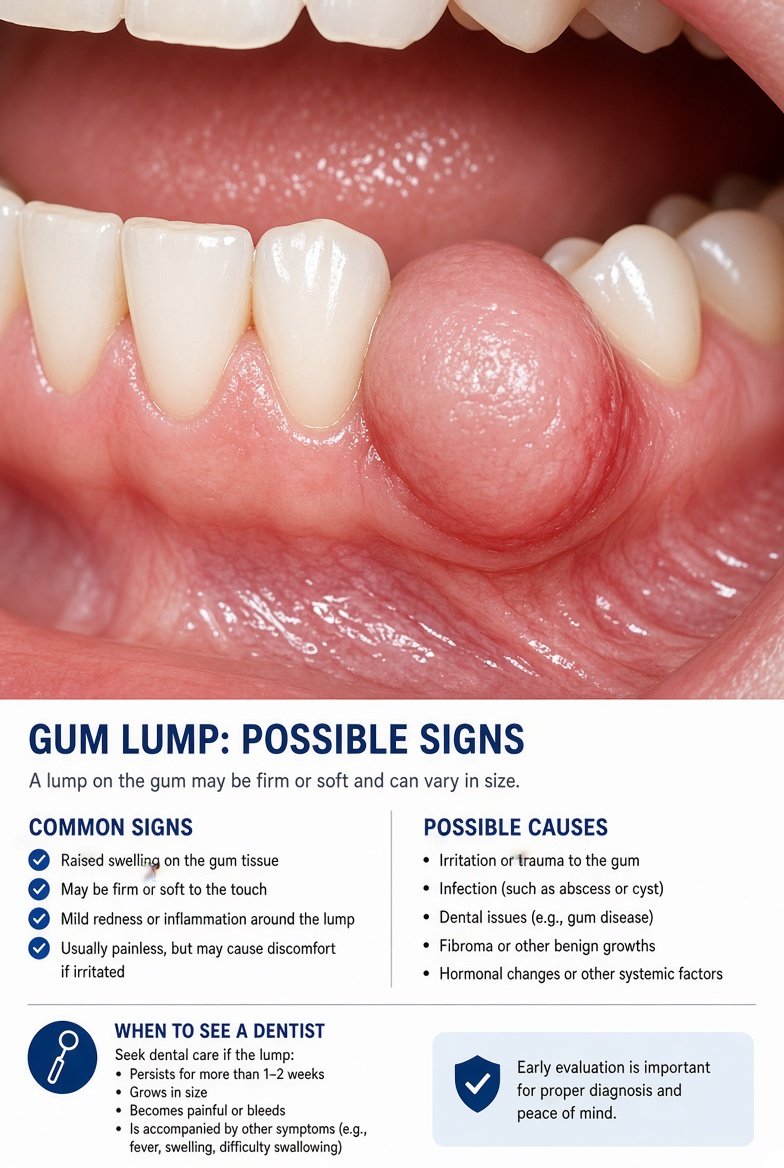
Finding a lump on gum tissue can feel scary. You brush your teeth run your tongue over your mouth and suddenly you feel something new. Naturally your mind may jump to the worst case right away. But take a deep breath because most gum lumps turn out to be harmless. Still some need quick attention. In this guide we will walk through the common causes the warning signs and the treatment options in simple words. So think of it as a friendly chat before your dental visit.
What Is a Lump on Gum
A lump on gum tissue is any bump swelling or raised spot on the gums. It can be soft or hard. Some lumps hurt while others are completely painless. You may find one above a tooth below a tooth or somewhere in between. Also some appear overnight and others grow slowly over months.
The tricky part is that many different problems look alike. For example a small infection a bony growth and an early sign of something serious can all feel like a bump. That is why guessing at home is never a good idea. However you can learn the basics and that helps you judge how urgent your situation is.
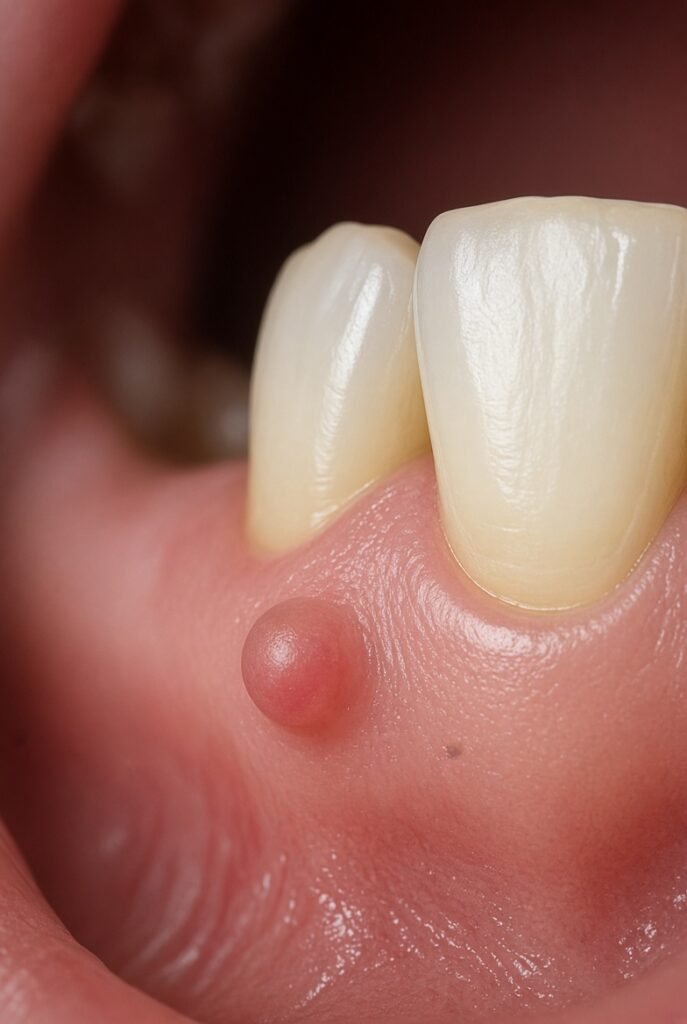
Common Causes of a Lump on Gum in Mouth
Let’s start with the usual suspects. Most people who find a lump on gum in mouth areas are dealing with one of these causes. Knowing them can also calm your nerves and prepare you for your dental visit.
Dental Abscess or Gum Boil
A tooth infection can create a pocket of pus. Your body pushes that pus toward the gum and a bump forms. It often feels soft and may hurt when you press it. Besides that you might notice a bad taste or a small pimple-like spot. Because the infection will not go away on its own this one needs treatment.
Cysts
A cyst is a fluid-filled sac. In many cases a lump on gum above tooth roots is a cyst linked to an old infection or a dead tooth. Cysts grow slowly and may cause no pain at all. Because of that many people ignore them for a long time. Fortunately your dentist can spot them clearly on an X-ray.
Fibroma or Irritation Bumps
Sometimes your gum simply reacts to constant rubbing. A rough filling an ill-fitting denture or cheek biting can cause a small firm bump. Dentists call this a fibroma. Generally it is harmless but your dentist should still confirm that.
Pregnancy and Hormonal Changes
Hormones can make gums extra sensitive. As a result some women get a red soft lump called a pregnancy tumor. The name sounds scary but it is not cancer. It often settles after delivery. Even so some cases need gentle removal.
Soft Painless Lump on Gum Should You Worry
A soft painless lump on gum tissue is one of the most common searches people make. The lack of pain feels reassuring. However it can also fool you because pain is not the best guide here. For example some serious problems stay quiet for a long time.
A soft lump with no pain is often a cyst a fibroma or a small mucocele. A mucocele is a tiny bubble that forms when a salivary gland gets blocked. Overall these are usually harmless. Even so keep an eye on any lump on gum no pain situation. If it stays longer than two weeks grows bigger or bleeds book a dental visit.
Soft painless lump on gum treatment depends on the cause. A cyst may need a small procedure to remove it. Meanwhile a fibroma may need a quick trim. A mucocele may heal by itself or your dentist may remove it. Above all get a proper diagnosis first.
Hard Bony Lump on Gum What Is Going On
Now let’s talk about the hard bony lump on gum. It feels like a small rock under your gum. Usually it does not move and it does not hurt. If that sounds like you there is a good chance it is exostosis.
Exostosis Explained
Exostosis is a slow bony growth that forms on the jawbone. These growths are very common and benign. In fact many people have them without ever noticing. Some develop from heavy teeth grinding or clenching. Others simply run in the family.
A hard bony lump on gum above tooth areas often shows up on the outer side of the upper jaw. Likewise a hard bony lump on gum below tooth areas may appear along the lower jaw. Both are usually harmless so your dentist may simply watch them over time. However if they cause trouble with eating speaking or wearing dentures surgery can smooth them down.
Hard Bony Lump on Gum That Hurts
What if you have a hard bony lump on gum that hurts Pain changes the story a bit. Exostosis alone rarely hurts. Therefore a painful hard lump may point to something else such as an infection an injury or gum irritation over the bony area.
Sometimes hard food scratches the thin gum over an exostosis. That can cause a sore spot. In other cases a tooth infection sits right underneath the lump. Either way do not ignore the pain. Meanwhile rinse gently with warm salt water and see your dentist soon. But if you notice fever facial swelling or trouble swallowing get urgent care right away.
Lump on Gum After Tooth Extraction
Many people notice a lump on gum after tooth extraction and panic. Let’s ease your mind a little. Your mouth goes through a lot of change after a tooth comes out. In fact the bone and gum need time to heal and reshape.
A soft lump on gum after tooth extraction may be healing tissue. Otherwise it can be a mild infection or a small piece of leftover material. A hard bony lump on gum after tooth extraction is often a sharp edge of bone. This is called a bone spicule. As you heal it can work its way up through the gum. It feels rough and may cause mild soreness.
Most of these settle down in a few weeks. Still call your dentist if the lump grows oozes pus or hurts more each day. Bad breath fever or swelling are also signs to get checked. Then your dentist can smooth out sharp bone or clear an infection quickly.
Lump on Gum Above Tooth Cyst or Infection
A lump on gum above tooth roots deserves a closer look. The upper gum area sits right over the root tip. So when bacteria reach the root the body may build a cyst or an abscess there. You may see a hard lump on gum above tooth areas that feels tender. Or it may feel soft and painless.
Here is a simple way to tell them apart though only a dentist can be sure. An abscess usually hurts swells and may leak pus. On the other hand a cyst is often silent and slow. Both trace back to a tooth problem. Treatment may include a root canal a tooth extraction or a small surgery to remove the cyst. So the earlier you go the simpler the fix.
Oral Cancer Lump on Gum Early Signs to Know
Let’s talk about the big worry. An oral cancer lump on gum is rare compared with other causes. Still it is important to know the signs. After all early detection makes a huge difference in treatment results.
The early signs of oral cancer lump on gum tissue can include
- A lump or thickened patch that does not go away
- A sore or ulcer that fails to heal in two to three weeks
- Red or white patches on the gum
- Loose teeth with no clear reason
- Numbness ongoing mouth pain or trouble swallowing
An oral cancer hard bony lump on gum is not the typical picture. Instead most oral cancers look like an ulcer a firm growth or a colored patch. Meanwhile the smooth hard painless bump that has been there for years is usually exostosis. Still do not diagnose yourself. Any lump that is new growing or bleeding should be checked.
Risk factors matter too. Tobacco betel quid gutka heavy alcohol use and HPV infection raise the risk. Therefore if you use any of these regular dental checkups become even more important. Also your dentist can spot changes long before you feel them.
How Dentists Diagnose a Lump on Gum
You may wonder what happens at the dental visit. Actually it is simpler than you think. First your dentist will ask when you noticed the lump and whether it hurts. Then they will look at it feel it gently and check the nearby teeth.
Next they will likely take an X-ray. This also shows cysts infections and bone growths clearly. For some lumps a small tissue sample called a biopsy may be needed. A biopsy sounds intense but it is a quick and common step. Above all it is the only sure way to rule out serious causes when a lump looks unusual.
Treatment Options for a Lump on Gum
Treatment depends entirely on the cause. There is no single fix for every lump on gum. So here is a quick overview to show you what to expect.
Infections need drainage and often antibiotics along with a root canal or extraction. Cysts usually need a small procedure to remove them. Fibromas and pregnancy lumps can be trimmed if they bother you. Exostosis needs no treatment unless it causes problems. However if a lump looks suspicious your dentist will refer you to a specialist right away.
Above all please avoid popping or cutting a lump at home. Doing so can spread infection and cause more damage. Instead leave it to a professional who can do it safely.
Simple Home Care While You Wait
While waiting for your appointment you can keep your mouth comfortable. These steps do not cure the problem but they help you feel better. First rinse with warm salt water two or three times a day. Next brush gently around the area with a soft brush. Also skip very hot spicy or crunchy foods that may irritate the spot.
Try not to press or poke the lump again and again. It is tempting but it only irritates the tissue. In addition over-the-counter pain relievers may ease discomfort if you can safely take them. Remember home care is only a bridge. It never replaces a proper checkup.
When Should You See a Dentist Right Away
Some situations should not wait. For instance book a visit soon if your lump on gum stays longer than two weeks. Go sooner if it grows bleeds or keeps coming back. Likewise sudden pain pus or a bad taste calls for quick care.
Get urgent help if you have fever swelling in your face or neck or trouble breathing or swallowing. These can signal a spreading infection. Trust your gut too. If something feels off an early visit costs you very little. In the end it could save you a lot of trouble.
How to Prevent a Lump on Gum
You cannot prevent every gum lump but good habits lower your risk. First brush twice a day and floss daily. Next visit your dentist every six months for cleanings and oral cancer screening. Also fix cavities early before they reach the root. If you grind your teeth at night ask about a night guard.
Additionally avoid tobacco and limit alcohol. Both are hard on your gums and raise the risk of serious problems. Finally check your own mouth once a month. Look at your gums tongue and cheeks in good light. That way you learn what is normal for you and spot changes early.
Final Thoughts
A lump on gum is usually not a big deal but you should never ignore it. Soft lumps often come from infections or cysts. Meanwhile hard bony lumps are often harmless exostosis. Lumps after extraction are often part of healing. Still an oral cancer lump on gum is a real possibility in rare cases so early checking is your best protection.
So if you have found a lump do not panic and do not wait too long. Instead make a simple dental appointment and get a clear answer. After all peace of mind is worth it and your gums will thank you.